
CS2 Rush Hour: how the new 3v3 mode works
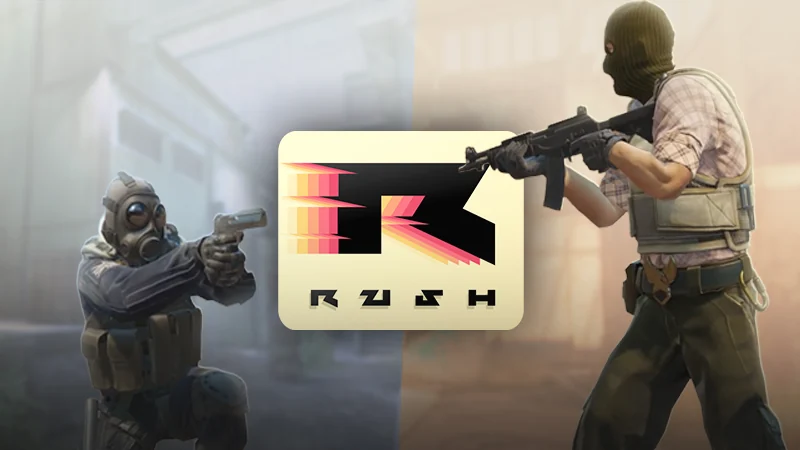
Rush brings three-player teams, changing arenas and a castle objective to CS2. The same September update also rewrote Premier map selection and added silent reloads.
Win the tower, then push towards the castle
Rush arrived in Counter-Strike 2 on 22 September 2026 with three players on each side and a match structure that takes teams through randomly selected battle arenas towards the opposing castle. To win a round, your team needs control of the tower when the enemy team is eliminated or the timer expires. Reaching and capturing the enemy castle decides the match.
There's a separate Rush queue and a friends leaderboard.
A small budget and short rounds keep the decisions close together: spend, take space, contest the objective, then prepare for the next arena. Holding an angle can still help your team, but an elimination has to fit the objective. A trio that wins a fight and leaves the tower unattended can waste the opening it just created.
Premier now picks four maps before the draw
Premier changed in the same release. Team one picks a map, team two picks two maps, then team one picks the fourth. The game randomly selects one of those four choices for the match. This replaced the process of banning maps until a single option remained.
For a regular group, the preparation question becomes which maps everyone can contribute on. Your favourite pick can enter the selection, but it isn’t guaranteed to be the map you play. A simple plan for each of the four choices is useful before the loading screen appears. The announcement does not describe the final selection as a player vote.
Silent reloads trade speed for information
Holding the reload key performs a silent reload, which takes longer than the normal action. Valve also removed the sound from unscoping a sniper weapon. Both changes affect what an opponent can learn without seeing you.
You’ll still need a safe position for the longer reload. Silence offers little help if the opponent reaches you while the animation is still running. Valve followed up on 24 September with fixes for a faster-than-intended silent-reload sequence and a shotgun exploit, then addressed cases where loud reloads persisted on 25 September.
Crosshairs gained actual pixel measurements
The new Crosshair/Scopes settings include additional shapes and a resolution-independent system, with Valve’s 23 September clarification explaining that thickness and length are expressed in pixels and automatically scale when resolution changes. That follow-up also added a static square style and an option for half-outlines.
The release improved blood and bullet-impact visibility, restored Steam-group clan tags and added C4 sticker support. These sit alongside the new mode; none requires treating Rush as the replacement for a standard competitive match.
Rush received immediate rules and geometry fixes
On 23 September, Valve increased the maximum post-elimination countdown on the end rooms and Convoy from seven to fourteen seconds. That countdown does not activate when a whole team disappears through suicides, team kills or disconnects. Warmup, freeze time and technical timeouts were shortened, and later patches continued correcting gaps and clipping.
Those changes are worth keeping beside any launch guide. The original announcement explains Rush’s objective; the follow-up notes explain adjustments made once people were playing it. The current rules in your installed client take precedence when a September detail has since changed.
About these stories
CS2 and crypto, with sources
Follow Counter-Strike updates, tournament moments and major crypto developments. Our articles link to original announcements and records so you can read the source behind the story.
A date for the event, a date for the article
Event dates show when the reported announcement or milestone happened. Each article separately shows its actual publication date. Historical features look back at the event rather than claiming to have been published at the time.
Images are credited on the article. Illustrative images are identified in the credit; they are not photographs of the reported event.